
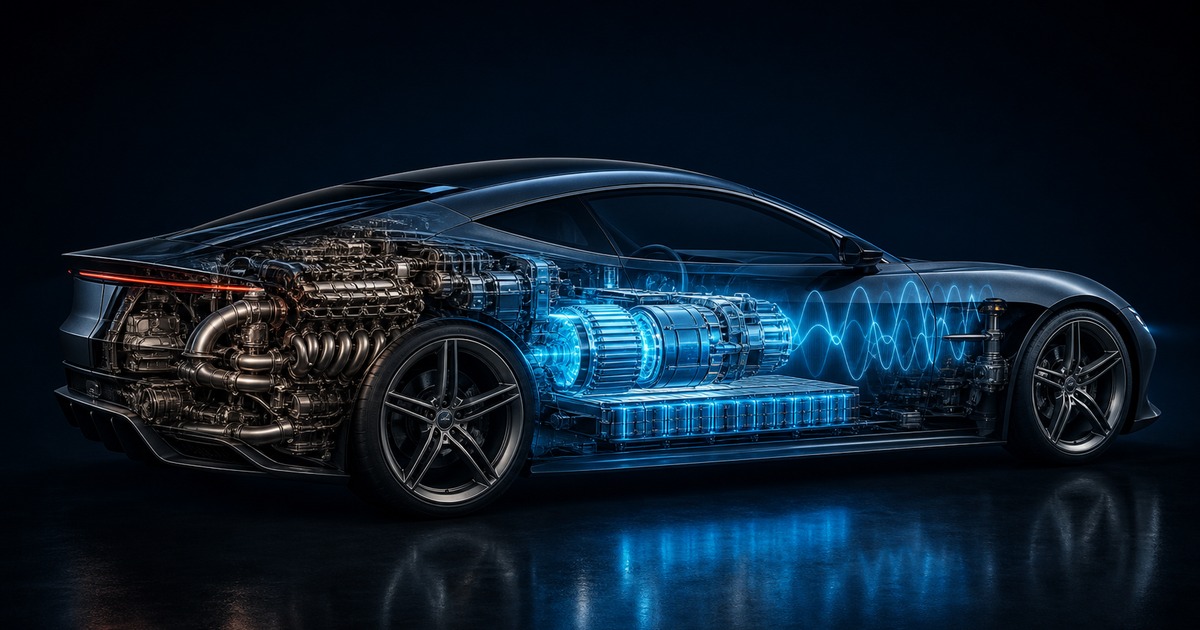
An electric brand transition succeeds when the company preserves the customer outcome while replacing the technology that used to create it. Ferrari cannot treat a fully electric car as a combustion product with one component removed. It has to rebuild sound, response, feedback, and identity around a different mechanical base.
Ferrari had already used electrification inside its traditional architecture. The SF90 combined a combustion engine with three electric motors, and the F80 is built around a V6-hybrid powertrain. The official Ferrari F80 overview describes that car as an extreme development of the internal-combustion engine. Electric components extend the established system. They do not replace its emotional center.
A new core removes old compounding advantages
Legacy companies often look slow because the next architecture destroys assets that took decades to build. Ferrari’s combustion advantage includes engine design, gearbox behavior, exhaust sound, vibration, racing heritage, and the expectations customers bring before driving. A full electric system does not automatically reward those capabilities in the same way.
This is the same strategic problem founders face when a capability jump changes the basis of competition. Our analysis of how an AI moat changes after a capability jump explains the operating response: identify what customers actually value, separate it from the old implementation, and rebuild the delivery system around the new constraint.
The mistake is defending every legacy feature because it once created differentiation. Some features are the value. Others are only the historical mechanism. A customer may value control, immediacy, feedback, status, or trust. If a new architecture can deliver those outcomes differently, copying the old mechanism can make the new product feel artificial.
Ferrari chose authentic feedback over imitation
The official Ferrari Elettrica technical presentation makes the sound decision unusually clear. Ferrari says the sound is not digitally generated to imitate an internal-combustion engine. A sensor captures mechanical vibrations from the electric drivetrain, then the system amplifies them in a way Ferrari compares with an electric guitar.
That choice is a product strategy, not a novelty. The company is looking for emotion inside the new machine instead of playing a recording of the old one. It preserves direct feedback between driver input and vehicle response while accepting that the source of the feedback has changed.
Founders can use the same test when replacing a product core:
- Name the outcome: what does the customer feel, achieve, or trust?
- Expose the old dependency: which technology currently creates that outcome?
- Remove imitation: where is the new system pretending to be the old one?
- Design native feedback: how does the new architecture prove its value directly?
- Protect continuity: which brand promises must survive the migration?
The migration needs a business case, not nostalgia
A technological transition can consume money for years while producing an impressive demonstration and weak customer value. The investment decision still needs a buyer, a measurable outcome, a rollout path, and a stop condition. Use the three questions before buying AI as a general migration filter: what job changes, what evidence is trusted, and how will completion be verified?
The commercial story should also be expressed in operating terms. A feature matters when it changes revenue, cost, risk, speed, or retention. That is why payback periods beat feature lists during a major technology shift. The board cannot approve identity alone. It needs a credible path from the new architecture to customer value and economic return.
Ferrari’s lesson is not that every legacy company should move first. It is that adding a new layer eventually stops working when the old core becomes the constraint. At that point, leadership must decide which promise survives and build a native system that can deliver it.
Frequently Asked Questions
It is the replacement of a product's technological core while preserving the customer outcomes and brand promises that made the previous system valuable.
Hybrid models extend a combustion architecture with electric components. Ferrari Elettrica uses a fully electric core, so feedback and identity must be created from that architecture.
Ferrari says it captures mechanical vibrations from the electric drivetrain and amplifies them, instead of digitally reproducing the timbre of an internal-combustion engine.
Preserve the customer outcome, trusted feedback, service continuity, and measurable business value. The old mechanism should survive only when it still serves those promises.
If your product is approaching that architectural break, Book a consultation to map the customer promise, migration risk, and first proof point.